The Quiet Counter

How senior professionals negotiate compensation without burning the room.

If your total package is $200,000 to $1,000,000, there is typically 5–15% of value still on the table by the time you sign. The Quiet Counter shows you where it sits, which lever moves it, and how to phrase the ask the other side can actually approve.

Get Instant Access — $97 30-day refund. Instant download.
VSL — coming this week

11-minute walkthrough from the author. Real voice. No theatrics.

The Problem

The headline number is not the offer.

A recruiter summary can make $350,000 look cleaner than it is. A written packet can make $280,000 look weaker than it is. A senior offer is not one document. It is three.

1. The employment letter

Base salary. Start date. Bonus eligibility. Sign-on cash.

2. The equity plan

Grant type. Vesting schedule. Acceleration. What happens if the company is sold.

3. Change-of-control & severance

Severance. Bonus treatment on exit. Benefits continuation. Non-competes.

Most candidates read the first one. Skim the second. Never see the third. That is where the money moves — and where the risk sits when a reorg, a board change, or a PE deal shows up a year in.

The Mechanism

Read the offer the way a CFO reads it.

The Quiet Counter is not about being aggressive. It is about reading a senior offer the way the people who approve it read it.

01

Map the offer across the three documents

So every dollar has a home, and nothing important is sitting in a document you haven’t opened yet.

02

Separate the cash lanes

Base, bonus, sign-on, deferred. Each one moves on a different lever, approved by different people, on different dates. Asking for “more cash” is how people lose recurring money in exchange for a one-time bump.

03

Price the equity

By instrument, vesting cadence, and liquidity path. Not by share count. Not by story.

04

Price the exit

Severance. Bonus treatment on exit. Equity acceleration. Restrictive covenants. Senior compensation is half about what you earn while the role is good, and half about what survives when it turns.

Once you have that audit, the conversation is no longer “Is this a strong offer?” It is “Which specific lever has room, and what can this company actually approve in the room I am not in?”

In Practice

Six days. One email. 23% better position.

Case: Megan, VP Product Marketing

Megan, a product director in Atlanta, gets a VP Product Marketing offer from a PE-backed software company. The recruiter calls the offer strong. About $400,000 first-year comp. Base $235,000. Bonus target 25%. Equity described as “$400,000 at the current 409A valuation.” Sign-on $30,000. Severance three months. Start in four weeks. If she accepts on Wednesday night, that’s the deal.

She doesn’t. She asks for the full offer letter, the equity plan, and the change-of-control agreement. Two hours Thursday evening to read them.

What the documents actually say

  • The “$400,000 of equity” Profits interests, not RSUs. Five-year vesting, one-year cliff. Year-one realized: $0.
  • The bonus Discretionary. Prorated. Plan document she hasn’t been given.
  • The sign-on Two installments. Twelve-month clawback.
  • Severance Three months base. No bonus. No benefits. Paired with a twelve-month industry-wide non-compete.
  • Real year-one cash $295,000–$325,000. Not $400,000.

Friday morning she sends one email with four asks. Move base to $260,000. Move sign-on to $50,000 in a single installment. Either extend severance to six months base plus target bonus, or reduce the non-compete to six months. Modify the vesting so it’s not all sitting on a one-year cliff.

By Tuesday she countersigned. Base $250,000. Sign-on $45,000. Non-compete narrowed from twelve months across all of marketing technology to nine months covering direct competitors only. Vesting modified to quarterly after the first year.

+$30K
First-year cash
+$62.5K
Preserved earning capacity
+23%
Risk-adjusted position
6 days
Offer to countersigned

No theatrics. No fake competing offers. She read the documents and pushed on the levers that move.

Why It Works

The structure beats the script.

Inside the company, that worked because of structure, not charm. Senior offers go through three layers. The hiring manager has limited flex inside band. HR and compensation check internal equity and policy. The skip-level approver, or the comp committee, signs off on anything above standard.

A $20,000 base bump might require escalation and a story. The same $20,000 as a sign-on bonus can clear in one signature. Same cost. Different politics.

The Quiet Counter teaches you which lever lives in which room. How comp bands really work. And how to phrase an ask that the CFO across the table can walk into a meeting and get approved.

What You Get

Four assets. One toolkit.

01

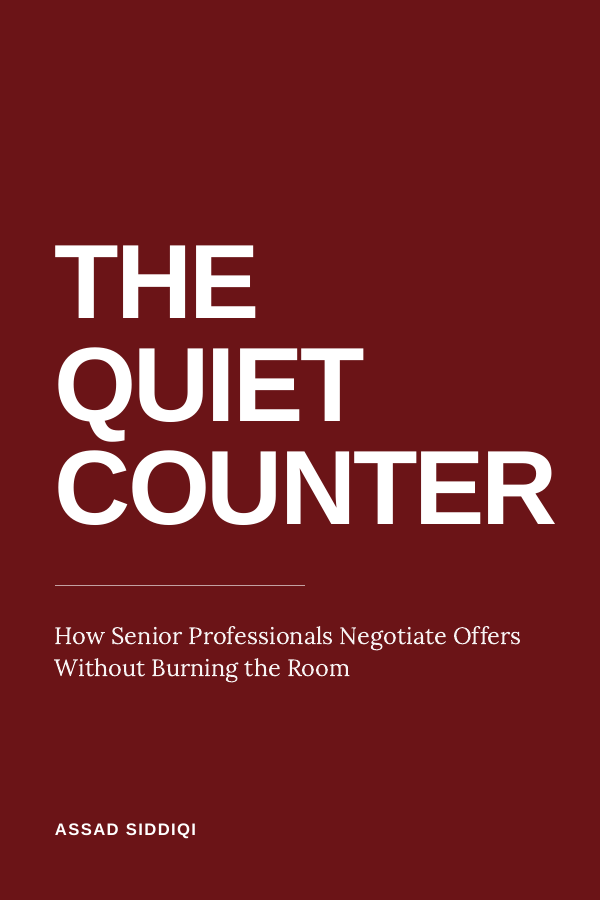
The Quiet Counter

The book. Ten chapters across three parts — Read the Package, Read the Room, Close and Apply. Map the offer. Separate the cash. Price the equity. Price the exit. See the other side of the table. Decide whether to push, hold, or trade. Plus Megan’s worked example, end to end. ~20,000 words.

02

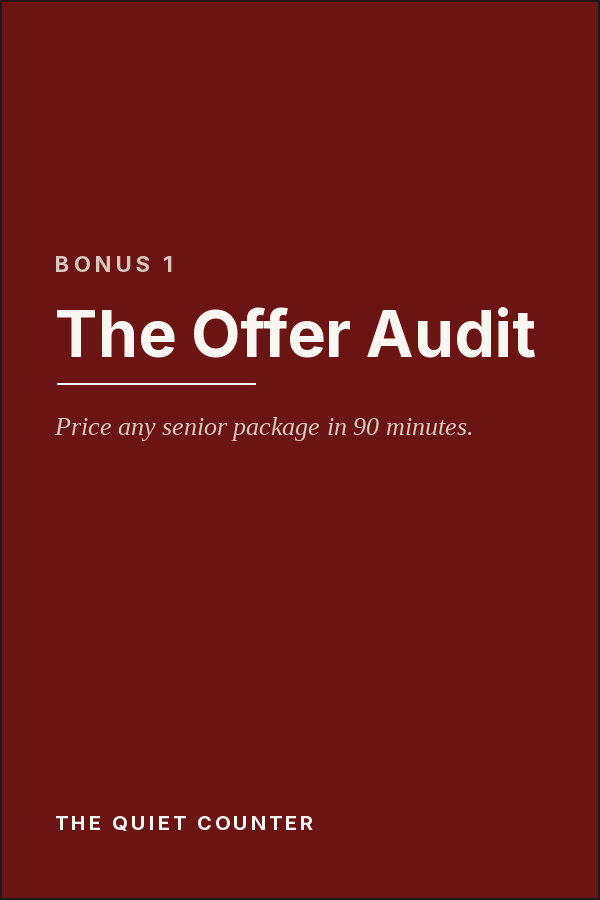
The Offer Audit

A seven-section worksheet to price any senior package in under 90 minutes — base, bonus, equity, deferred compensation, severance, exit protection, and a comparison totals section that puts the offer next to your current setup.

03

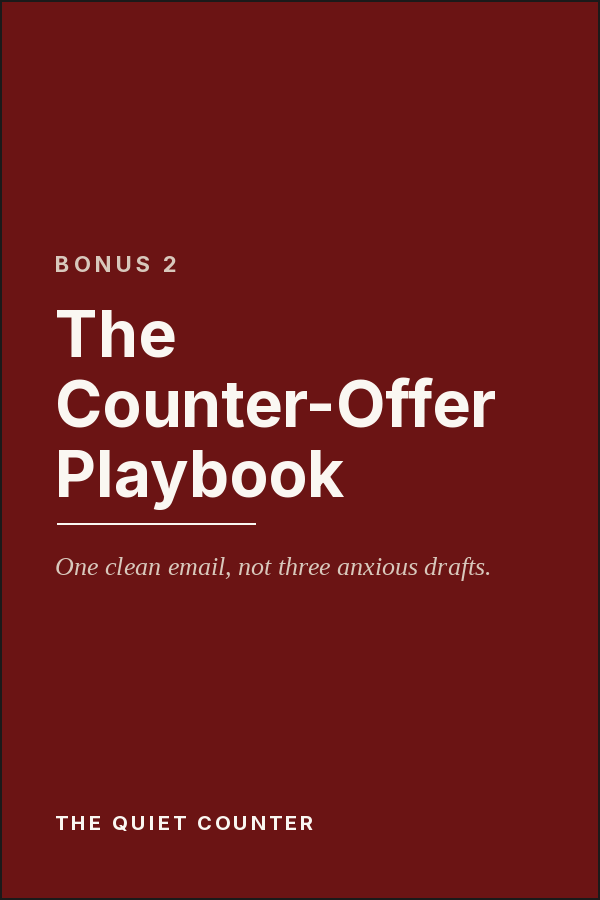
The Counter-Offer Playbook

Three short message templates — the first counter, the term trade, and the final confirmation. So you send one clean, professional email instead of three anxious drafts.

04

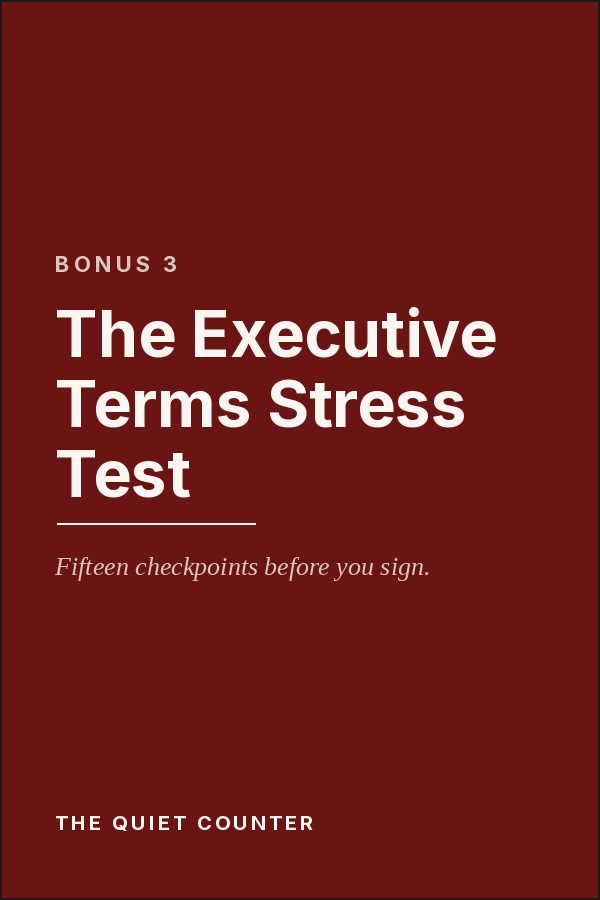
The Executive Terms Stress Test

Fifteen checkpoints for the clauses that quietly cost money later. Vesting cliffs. Repurchase rights. Change-of-control triggers. Restrictive covenant scope. Clawbacks.

The Math

Your alternatives are real, and they’re expensive.

An executive compensation attorney to review one offer will run $500–$2,500. You get the review. You don’t get a system you can use again. An executive negotiation coach will run $1,500–$2,500 across a few calls before you ever get to a counter. Or you wing it and pay for the gaps inside the contract for the rest of the role.

The Quiet Counter — full toolkit

$97

Book + Offer Audit + Counter-Offer Playbook + Stress Test

Get Instant Access

Instant download · 30-day refund · Pay once, keep it for every offer after

If it moves a $300,000 package by even one percent, it pays for itself multiple times over. And you keep the framework for every offer after this one.

The Guarantee

Use it for thirty days. Run your current offer, or the next one that comes in, through the Offer Audit and the Stress Test. If you do not find at least one specific clause, term, or number you would have signed past without the framework — email hello@thequietcounter.com. Full refund. Keep the materials.

Assad Siddiqi

About the author

Assad Siddiqi

Healthcare CFO. Both sides of the table.

Reads senior compensation packages from the company side — deciding who gets the offer bump, who doesn’t, and which asks clear comp committee. Has negotiated his own moves from analyst to CFO. The Quiet Counter is the toolkit he uses, written for the candidates he wishes brought it into the room.

Find me on LinkedIn →

Questions

The five questions buyers ask.

Who is this for?

Senior professionals evaluating offers in the $200,000–$1,000,000 total compensation range. Director through C-suite. Industry-agnostic, though the equity, severance, and change-of-control content is most useful for roles with material equity, deferred comp, or restrictive covenants.

I’m not actively looking. Is this useful now?

Yes — arguably more useful. Senior comp leverage is built before the offer arrives, not after. The framework reads cleanly when you’re not under deadline pressure. When the call comes, you’ve already done the work.

Is this just for tech / finance / healthcare?

The three-document framework, the cash-lane separation, the equity pricing, and the change-of-control review apply to any senior role with a written offer letter and an equity plan. Examples in the book draw from healthcare, tech, financial services, and professional services.

How long does it take to use?

The book is ~20,000 words — 90 minutes of focused reading. The Offer Audit is designed to be run on a real package in under 90 minutes. The Stress Test takes 30 minutes. If your offer deadline is in five days, you can have the audit done tonight and a clean written counter ready before the recruiter starts pushing.

What’s the refund process?

Use the framework on a real offer for thirty days. If you don’t find at least one specific clause, term, or number you would have signed past, email hello@thequietcounter.com. Full refund. You keep the materials.
Free

Not ready? Take the most useful four pages with you.

Twenty offer-letter phrases, translated to plain English. The clauses that look harmless and aren’t. Drop your email and the standalone PDF lands in your inbox.

No spam. Unsubscribe anytime. Roughly one email a month if I have something worth saying.

When the offer lands, the clock is yours, not theirs.

If the offer is on the table, the question is what you do before you sign. If the offer is coming, the question is whether you want to wait until the clock starts.

Get Instant Access — $97

30-day refund · Instant download